Why Decentralisation Fails to Deliver: Lessons from Uganda and Tanzania

This policy brief draws on a comparative case study of Uganda and Tanzania using documentary analysis conducted between January and July 2026. The review covered a wide range of literature and policy documents published between 1990 and 2026, capturing over three decades of decentralisation reforms and governance developments in the two countries. Sources examined included […]
Strengthening Local Government Capacity and Autonomy for Food and Nutrition in Kagera Region
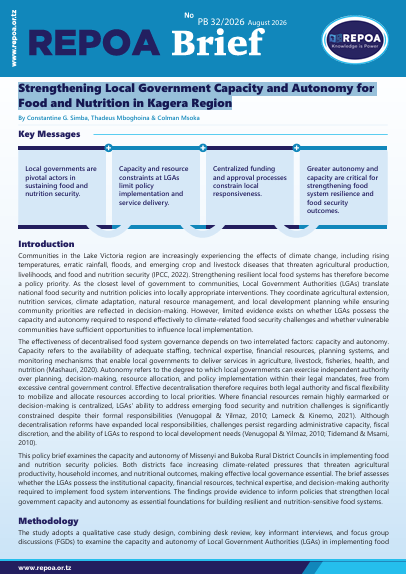
This policy brief examines the capacity and autonomy of Missenyi and Bukoba Rural District Councils in implementing food and nutrition security policies. Both districts face increasing climate-related pressures that threaten agricultural productivity, household incomes, and nutritional outcomes, making effective local governance essential. The brief assesses whether the LGAs possess the institutional capacity, financial resources, technical […]
Smallholder farmers’ access and use of knowledge and information to enhance agricultural productivity in rural Tanzania
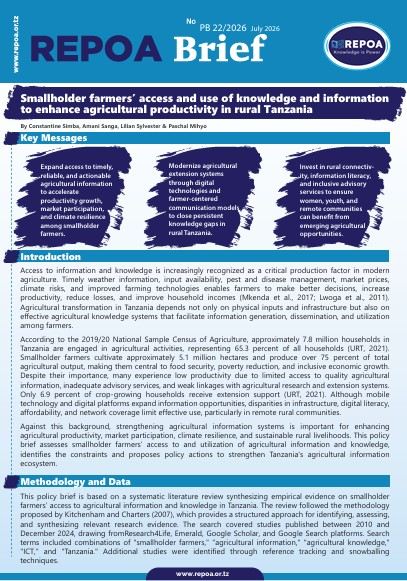
This Policy Brief assesses smallholder farmers’ access to and utilization of agricultural information and knowledge, identifies the constraints and proposes policy actions to strengthen Tanzania’s agricultural information ecosystem. READ ON…!
Tanzania’s Blue Economy at a Crossroads: Governance Challenges and Strategic Priorities
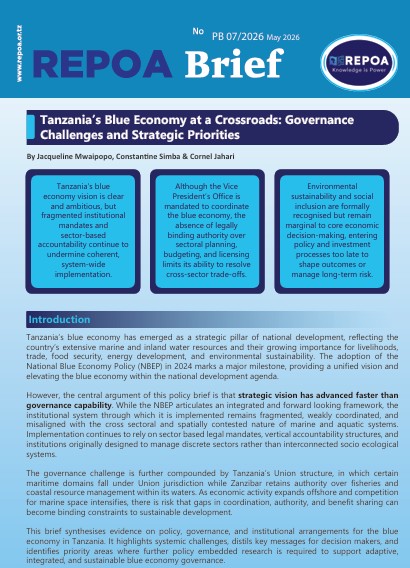
This Policy Brief synthesises evidence on policy, governance, and institutional arrangements for the blue economy in Tanzania. It highlights systemic challenges, distils key messages for decision makers, and identifies priority areas where further policy embedded research is required to support adaptive, integrated, and sustainable blue economy governance. READ ON…!
Sustaining Tanzania’s Marine Resources: Opportunities and Challenges for Strengthening Co-Management in Coastal Communities
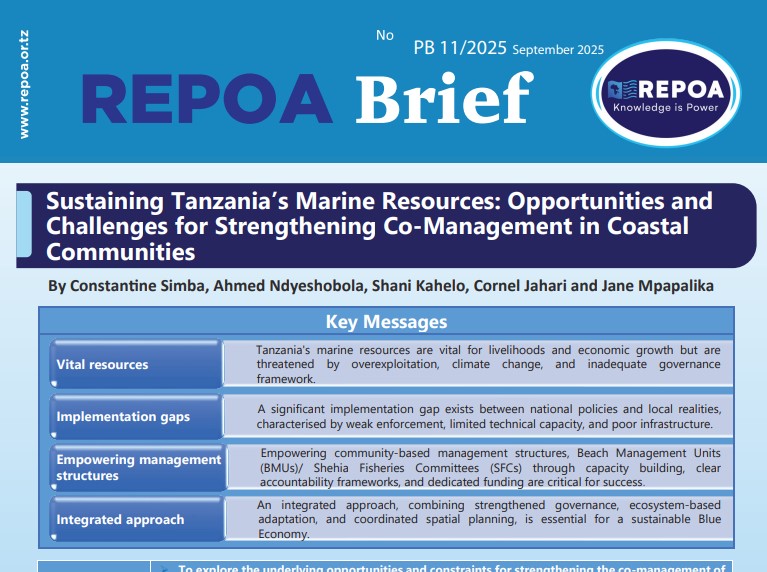
explore the underlying opportunities and constraints for strengthening the co-management of Tanzania’s marine resources in Coastal Communities.
From Shores & Households to Markets: Dynamics of Seaweed Farming in Tanzania
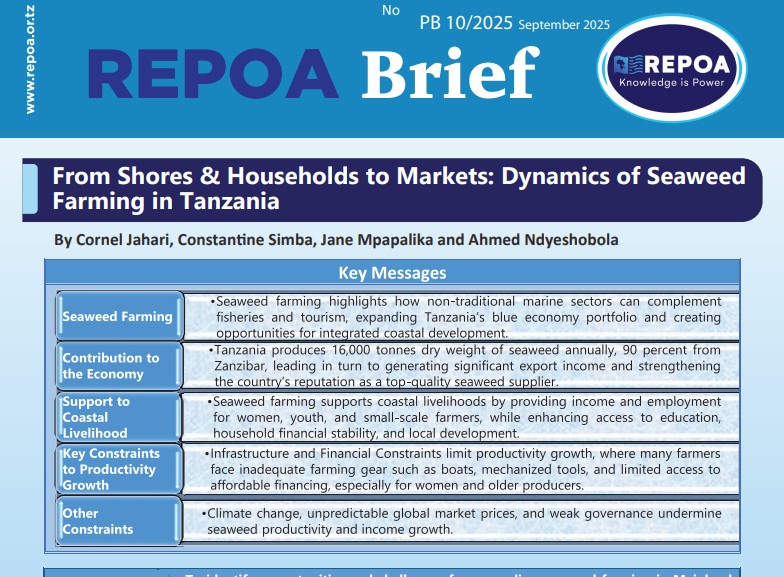
This Policy Brief identifies opportunities and challenges for expanding seaweed farming in Mainland Tanzania and Zanzibar, while strengthening sector resilience. READ ON…!
Unlocking the Blue Economy: Insights from the Fisheries Sector in Coastal Mainland Tanzania and Zanzibar
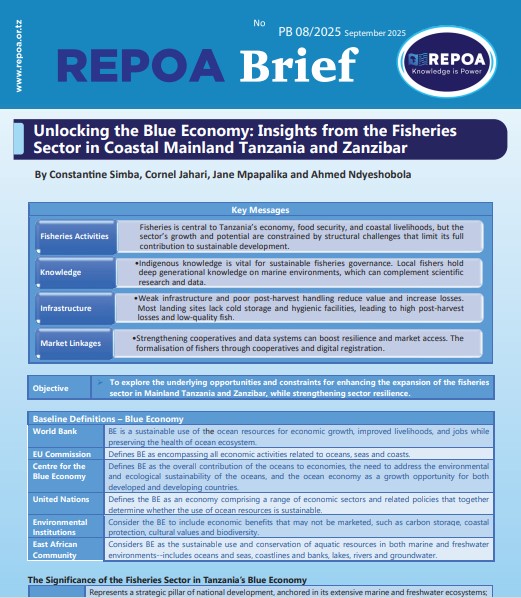
This Policy Brief explores the underlying opportunities and constraints for enhancing the expansion of the fisheries sector in Mainland Tanzania and Zanzibar, while strengthening sector resilience. READ ON…!
Assessing Labour Conditions in Solid Waste Management: A Tanzanian Case Study
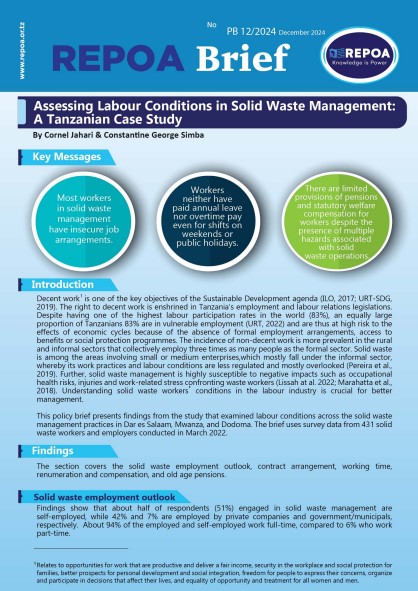
Solid waste workers are crucial to maintaining public health and environmental sustainability, especially in urban areas. Nevertheless, findings suggest that workers are exposed to several working conditions and challenges, including low salaries to cover household expenditures. They are hardly compensated whenever they work overtime, nor are they entitled to annual leave. Solid waste workers often […]
Post-Harvest Losses in Marketed fruits and vegetables: Evidence from selected markets in Dar es Salaam
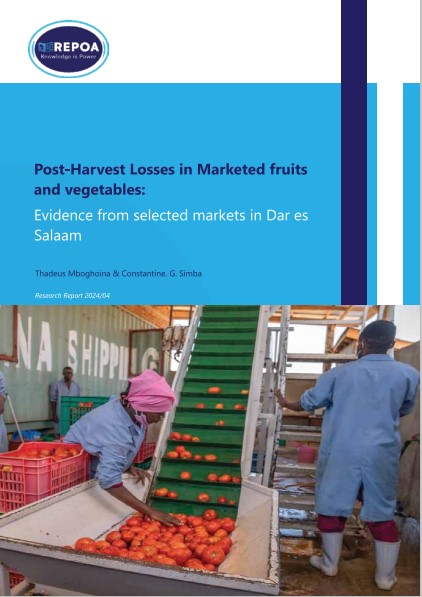
This study attempts to bridge the existing knowledge gap by focusing on post-harvest losses (PHL) in marketed fruits and vegetables in Dar es Salaam. There is arguably a limited but growing body of literature dedicated to studying PHLs in fruits and vegetables. There is even lesser attention, especially in developing economies, paid to losses incurred […]
Tanzanians commend COVID-19 response but call for more investment in preparing for future health emergencies
A recent Afrobarometer survey reveals that about one in seven Tanzanian households report losing a primary source of income due to the pandemic. Only about three in 10 adults say they have been vaccinated against COVID-19, and willingness to get vaccinated is strongly associated with trust in the government to ensure vaccine safety. Tanzanians are […]
Tanzanian youth cite health, water, economy as priority problems government should address
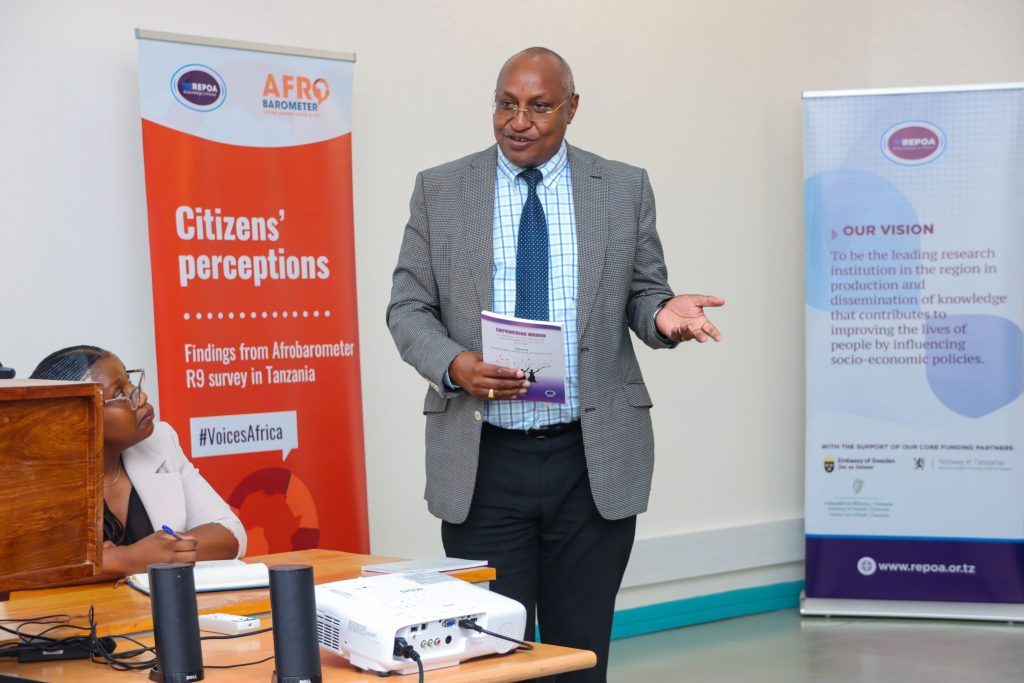
The Afrobarometer Round 9 survey, conducted in 2022, sheds light on how the youth of Tanzania perceive the country’s political and economic landscape. Survey findings show that while Tanzanian youth are more educated than their elders, they are also more likely to be unemployed. A majority of young Tanzanians think their country is moving in […]
Tourism in Tanzania: status, trend, and existing growth potentials
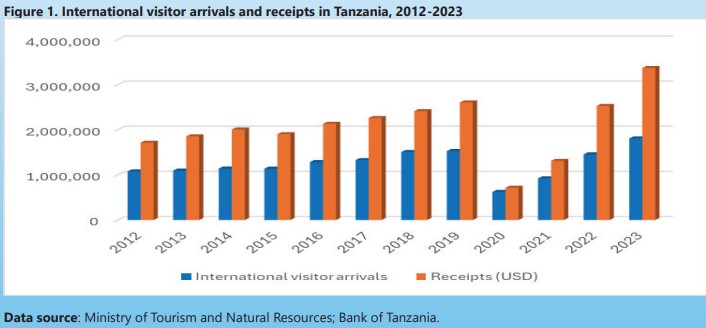
Tourism plays a significant role in livelihoods & poverty reduction, directly employing over 1.4 million workers and contributing 17% to GDP. Notwithstanding a near 75% decline following the global outbreak of the COVID-19 pandemic, receipts from international arrivals doubled between 2012 and 2023. Synergies between tourism and other sectors can be leveraged to facilitate much […]
Dignifying Well-being of Women: Labour Conditions in Solid Waste Management in Tanzania Cities

Gender disparities readily appear across the waste management value chain, reflecting prevalent imbalances in the socioeconomic structures. Women are predominantly situated in low-pay, insecure roles, and insufficient attention is directed toward addressing their needs during the maternity period. There is an urgent necessity to integrate a gender perspective into decision-making and policy formulation within the […]
Investing in Tanzania’s People – Valuing the U.S. Tanzania Partnership for Prosperity
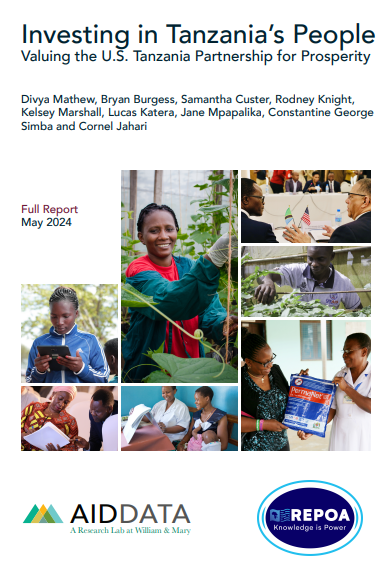
This study was conducted as a collaboration between REPOA and AidData, a U.S.-based research lab at William & Mary’s Global Research Institute. This research was made possible with generous support from the United States Department of State. The findings and conclusions of this report are those of the authors alone and do not necessarily reflect […]
Post-harvest losses in marketed fruits and vegetables: evidence from selected markets in Dar es Salaam

A large portion of food loss, especially in Africa, occurs at production or during storage and handling stages (Ridolfi, Hoffmann, & and Baral, 2018). Distribution and marketing processes contribute a further 13% of overall food loss and waste (ibid). Post-harvest fruits and vegetable losses experienced during distribution and marketing is still an area which is […]
Urban Solid Waste Management in Tanzania: Our Work, Our Health
This policy brief examines health and safety conditions in Tanzania’s urban solid waste management practices. The analysis draws from a survey of 431 solid waste workers conducted in 2021 in Dar es Salaam, Mwanza, and Dodoma city councils. Read the full details below…