The 29th Annual Research Workshop (ARW), co-hosted by REPOA, in collaboration with the Government of Zanzibar through the Ministry of Blue Economy and Fisheries, the National Planning Commission (NPC) of the United Republic of Tanzania, and CRDB Bank PLC, brought together policymakers, researchers, development partners, academics, private sector leaders, and civil society representatives to explore how the blue economy can drive inclusive and sustainable development in Tanzania.
Held in Zanzibar on 25-26 May 2026 under the theme “Transforming the Blue Economy for Inclusive and Sustainable Development in Tanzania,” the workshop examined opportunities for advancing economic growth, job creation, environmental protection, and improved livelihoods through sustainable use of marine and aquatic resources.
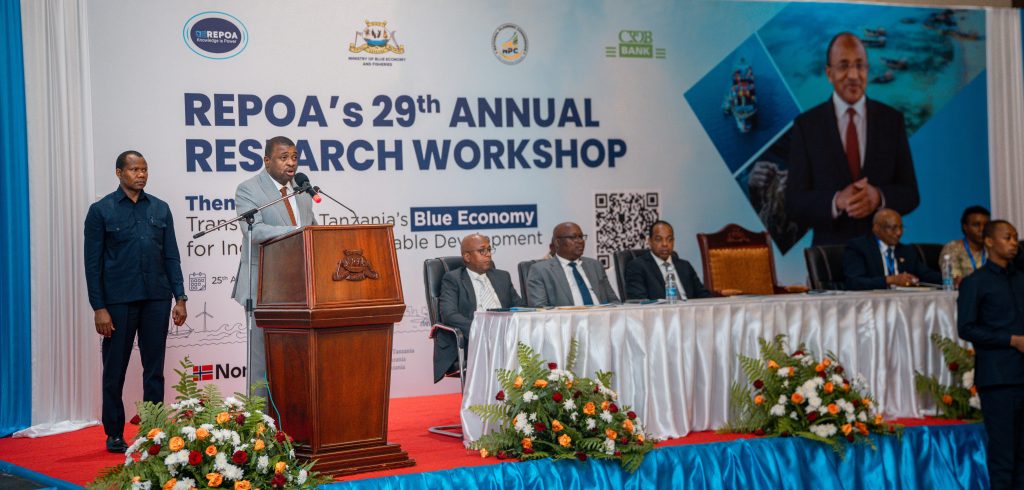
Opening the workshop, the Guest of Honour, Zanzibar’s Second Vice President, H.E. Hemed Suleiman Abdulla, reaffirmed the Zanzibar’s Government commitment to expanding the sector and attracting investment. “We welcome investors who are ready to invest in this sector because Zanzibar has already created a conducive environment with significant opportunities,” he said representing Zanzibar’s President & Chairperson of the Revolutionary Government, Dr. Hussein Ali Mwinyi, highlighting ongoing efforts to strengthen policy, institutional, and investment frameworks, including the implementation of the Zanzibar Blue Economy Policy and the Zanzibar Blue Economy Implementation Strategy.
Officials from the co-hosts and other participating institutions also emphasized that the workshop comes at a crucial moment as the Government of the United Republic of Tanzania and that of Zanzibar continue strengthening policy, institutional, and investment frameworks to unlock opportunities within the blue economy sector.
Throughout the discussions, participants emphasized that while the blue economy presents significant growth opportunities, its full potential can only be realised through stronger research, active community participation, and meaningful private sector engagement. They also called for robust legal and institutional frameworks, supported by regular policy reviews, to ensure the sector remains responsive to emerging environmental, technological, and economic challenges.
Speaking at the closing session, REPOA’s Executive Director, Dr. Donald Mmari, noted that research and stakeholder engagement emerged as key themes during the workshop. He stressed the importance of stronger collaboration among governments, private sector actors, research institutions, and international organisations across East and Southern Africa. Participants also highlighted the need for greater coordination to ensure that the benefits of the blue economy reach coastal and inland communities, including fishermen, seaweed farmers, and others whose livelihoods depend on aquatic resources.
Financing was identified as another critical area requiring attention. Stakeholders called on financial institutions to expand support for small-scale entrepreneurs through accessible loans, guarantees, and affordable credit facilities. Discussions also explored innovative financing mechanisms, including blue bonds, blended finance, climate finance, and public-private partnerships, as well as lessons from countries such as Namibia, Seychelles, Mauritius, South Africa, Indonesia, and Norway that have successfully leveraged research and evidence-based planning to guide blue economy development.
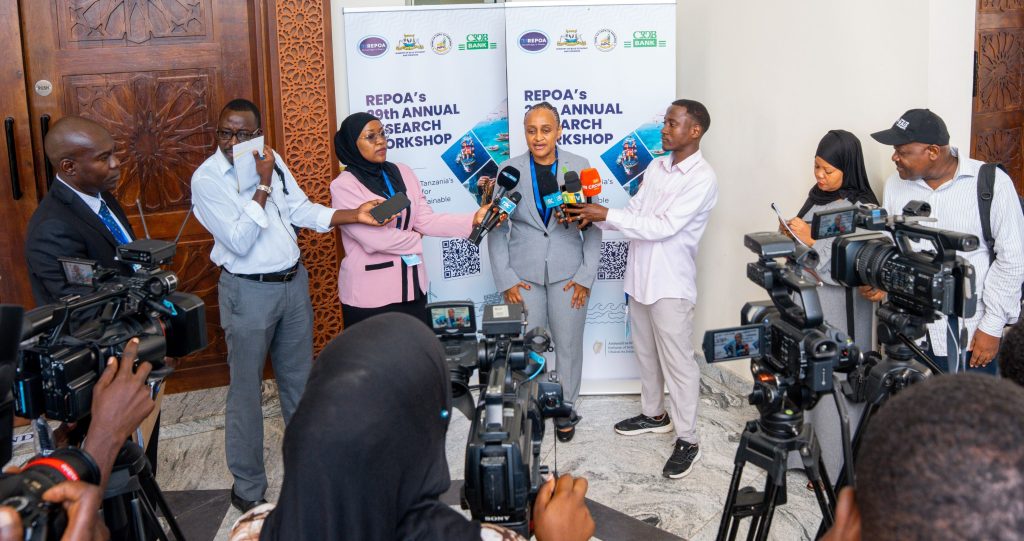
This REPOA’s flagship workshop concluded with a renewed commitment to strengthening evidence-based policymaking and fostering deeper collaboration among governments, research institutions, development partners, investors, and local communities. By facilitating the exchange of knowledge, global best practices, and practical policy recommendations, the 29th ARW contributed to shaping Tanzania’s blue economy agenda and advancing broader national, regional, and global conversations on sustainable ocean governance and inclusive development.