Commodity Prices and City Markets in Tanzania: The Case of Maize Markets
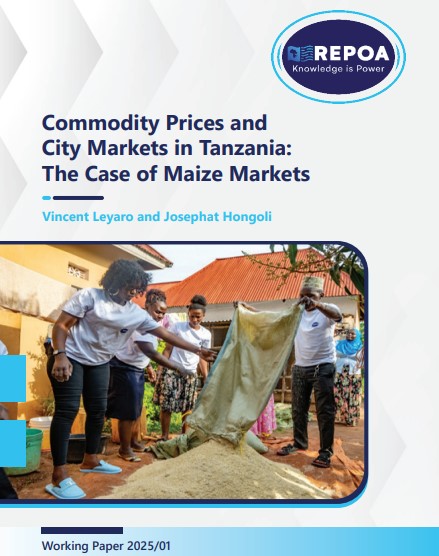
Using community-level and field survey data complemented with regional and district monthly commodity prices data across the country, this study takes the first step towards understanding rent extraction in the crop market in Tanzania. The market margins analysis from farmgate to regional wholesale to city retail markets showed that the regional market margins account for […]
From land expansion to efficiency: Tanzania’s hope for sustainable rice production
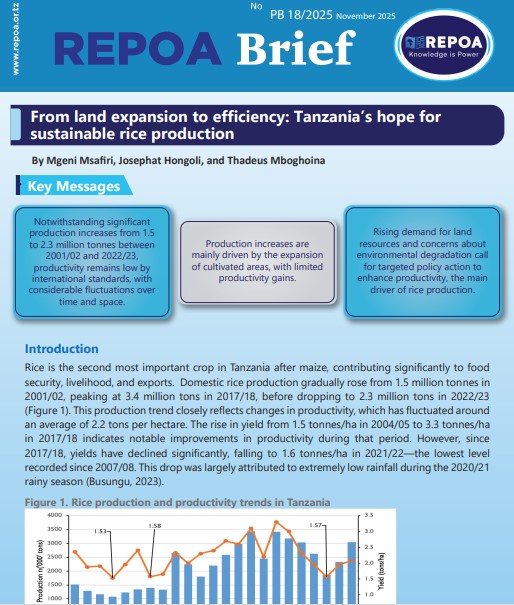
Over the years, Tanzania has witnessed significant expansion in domestic rice production, making it the second most important food crop in the country. This Policy Brief proposes a number of policy measures to improve rice yields in Tanzania – to catch up with the global and regional production averages. READ ON…!
Trade and Welfare Effects of EU–EAC Economic Partnership

Tanzania is at a crossroad, either to sign or not to sign the EU–ECA economic partnership agreement (EPA) deal. Fear of the unknown (potential losses) and uncertain benefits continue to delay the signing, ratification, and implementation of trade and investment agreements in many countries, hampering meaningful regional and global integration. Applying a suitably calibrated and […]
Diversification and Intra-Industry Trade Effects of East African Community: The Case of Tanzania
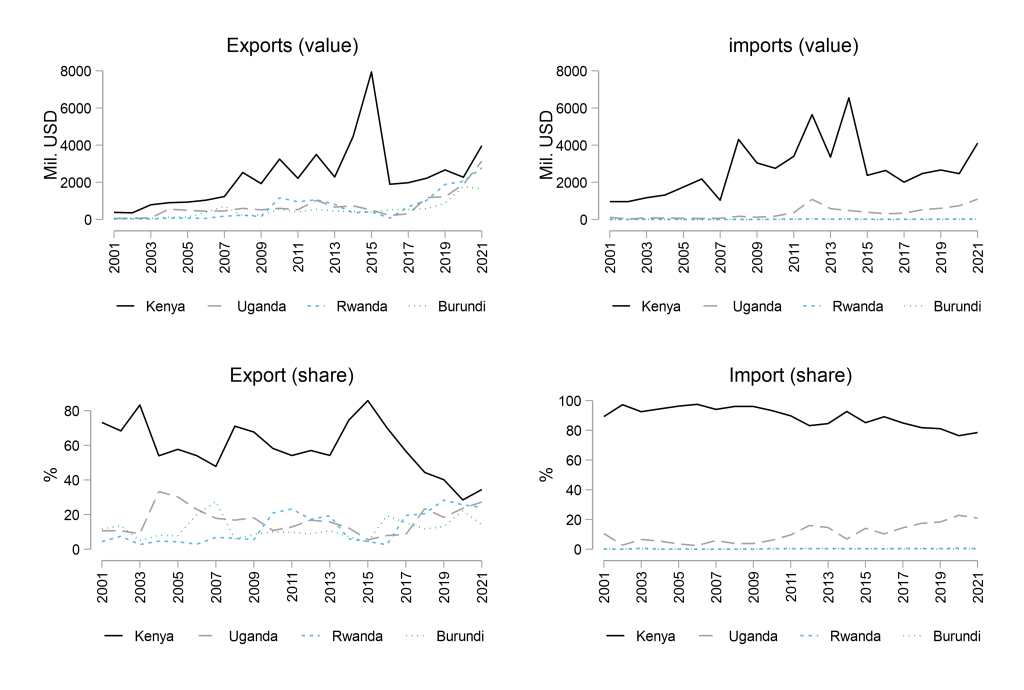
By expanding market size and lower trade costs, regional integration can enhance export diversification and competitiveness, that are important drivers of economic growth. Using disaggregated trade statistics at 6 HS code digits and applying Grubel-Lloyd Index (GLI), this study examines whether Tanzania’s pattern of trade structure with its trading partners’ in the EAC markets has […]
Estimating effects of the AfCFTA in Tanzania: Application of Poisson Pseudo Maximum Likelihood
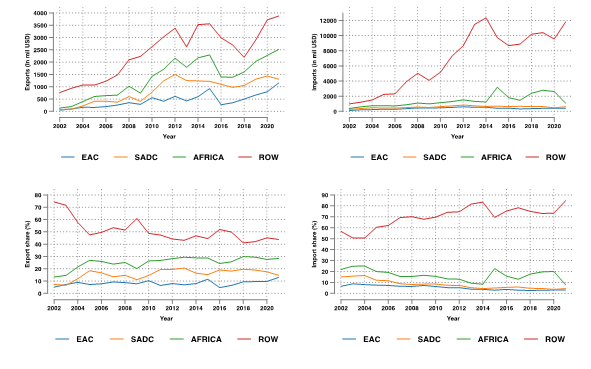
Using bilateral trade data for 157 countries and applying a General Equilibrium Poisson Pseudo Maximum Likelihood (GEPPML) model, we estimate the effects of the African Continental Free Trade Agreement (AfCFTA) on Tanzania’s trade/exports and welfare. The baseline estimates on the international border suggest that all else equal, the international border decreases trade by 97 percent. […]