Welfare effects of prolonged droughts and household coping mechanisms in rural Tanzania
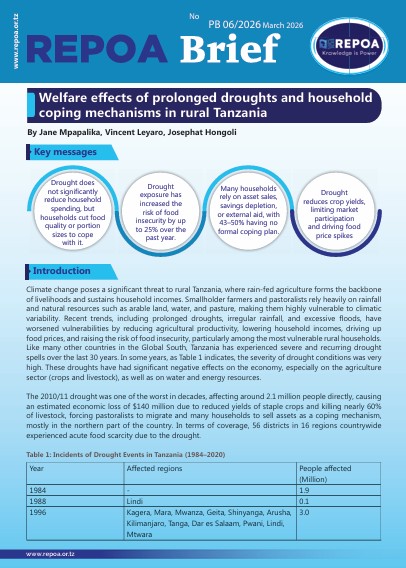
This brief examines how exposure to severe droughts affects various measures of rural household welfare and the potential channels through which drought shocks affect livelihoods. The findings aim to inform policy interventions that strengthen rural household resilience, enhance food security, and reduce vulnerability to climate-induced shocks. READ ON…!
Assessing the adequacy of graduate skills in the context of council loans for the youth in Tanzania
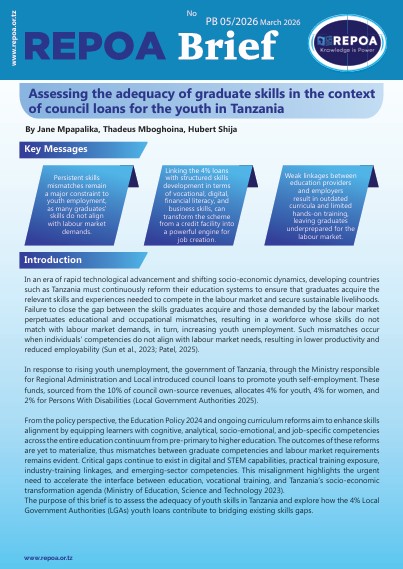
This Policy Brief examines youth skills in Tanzania and assesses how the 4% Local Government Authorities (LGAs) youth loan scheme helps bridge critical skills gaps, providing evidence to inform more effective youth empowerment policies and programmes. READ ON…!
Experience of youth in applying for the Councils Economic Empowerment loans
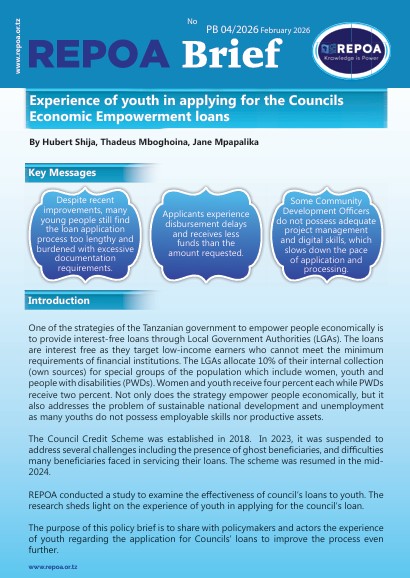
This Policy Brief explores the experiences of young people in Tanzania in accessing youth loans provided by local government councils. Drawing on their firsthand experiences, it highlights key challenges and opportunities within the application process, offering evidence-based insights and practical recommendations to help policymakers and other stakeholders strengthen the effectiveness, accessibility, and impact of council-administered […]
Challenges faced by youth beneficiaries of loans from the Local Government Authorities
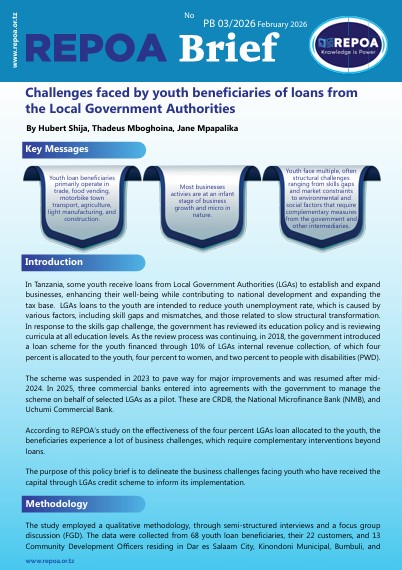
This Policy Brief delineates the business challenges facing youth in Tanzania who have received capital through the Local Government Authorities (LGAs) credit scheme to inform its implementation. READ ON…!
Tanzanians say women should be free to make their own marriage and childbearing decisions

This dispatch underscores the recent public-opinion data from a special Afrobarometer Round 10 survey module on sexual and reproductive health and rights in Tanzania, demonstrating a rather complex landscape. Click on View PDF to read more…!
Barriers to accessing quality daycare services for Most Vulnerable Children in Low-Income areas of Dar es Salaam
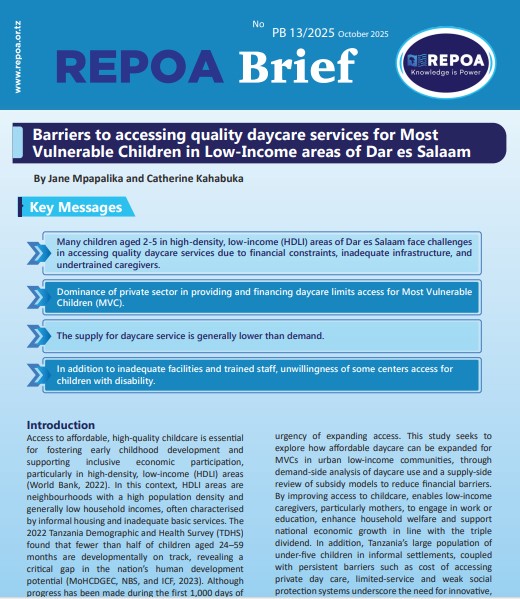
This Policy Brief presents barriers to accessing quality daycare services for Most Vulnerable Children (MVCs) in high-density, low-income (HDLI) areas of Dar es Salaam. It highlights both demand- and supply-side constraints in HDLI contexts and offers policy recommendations to improve access, affordability, and the quality of childcare services for MVCs in Tanzania. READ ON…!
Sustaining Tanzania’s Marine Resources: Opportunities and Challenges for Strengthening Co-Management in Coastal Communities
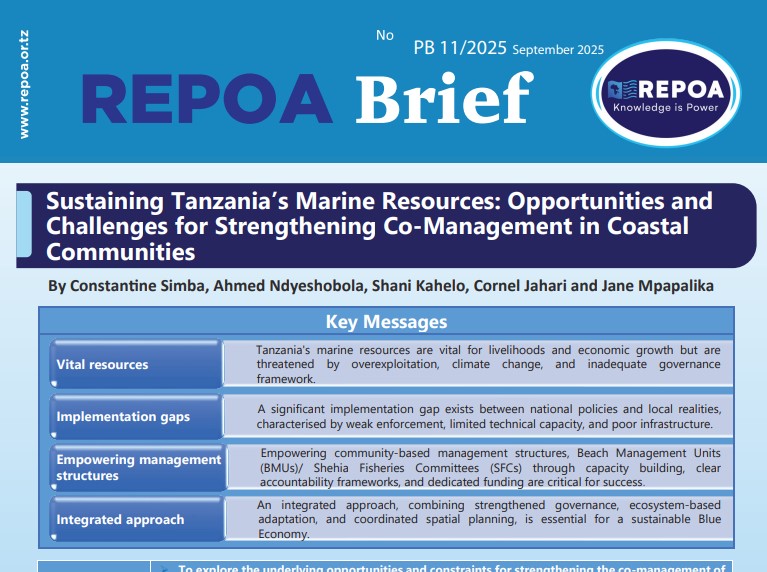
explore the underlying opportunities and constraints for strengthening the co-management of Tanzania’s marine resources in Coastal Communities.
From Shores & Households to Markets: Dynamics of Seaweed Farming in Tanzania
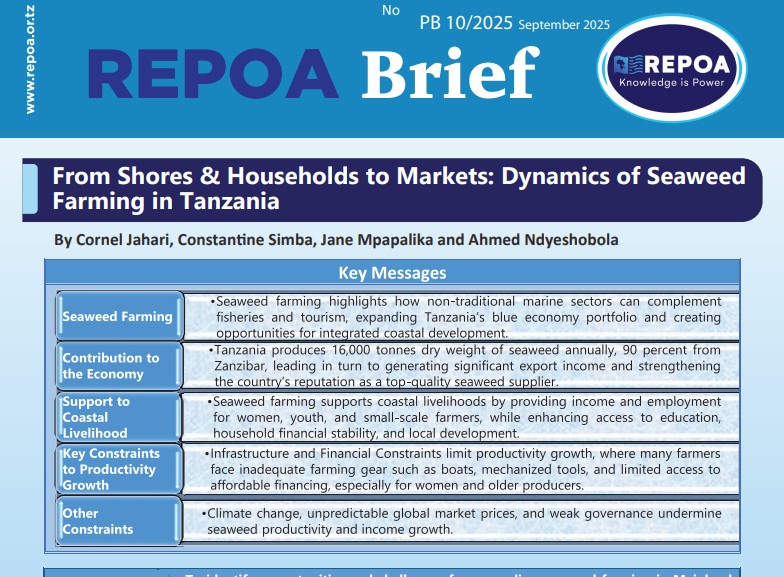
This Policy Brief identifies opportunities and challenges for expanding seaweed farming in Mainland Tanzania and Zanzibar, while strengthening sector resilience. READ ON…!
Unlocking the Blue Economy: Insights from the Fisheries Sector in Coastal Mainland Tanzania and Zanzibar
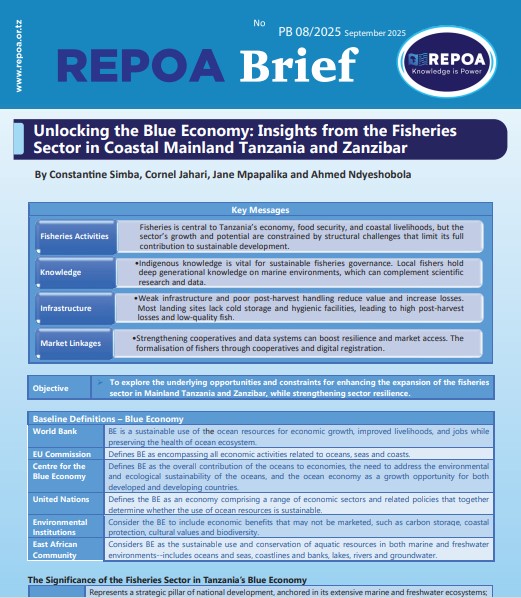
This Policy Brief explores the underlying opportunities and constraints for enhancing the expansion of the fisheries sector in Mainland Tanzania and Zanzibar, while strengthening sector resilience. READ ON…!
The effects of COVID-19 pandemic on enrollment rates and gender inequalities in Tanzania
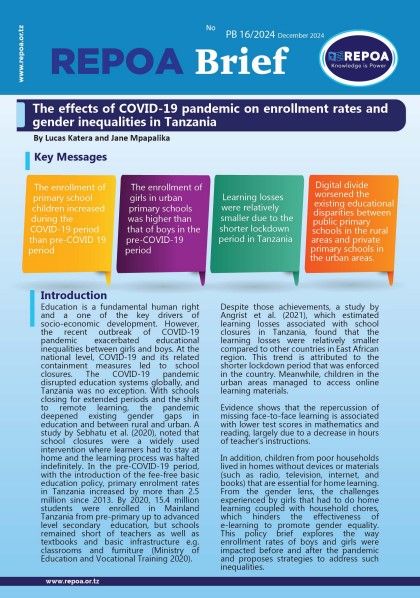
This study compares enrolment in the pre- and post-COVID-19 pandemic. During and after the outbreak of COVID-19 pandemic, enrolment rates rose compared to the pre-COVID-19 period in both public and private schools. Specifically, more girls than boys were enrolled in both Dar es salaam and Dodoma regions. This increase in girls’ enrolment may be attributed […]
Tanzanians say government must do ‘a lot more’ to limit climate change, but ordinary citizens should also do their part
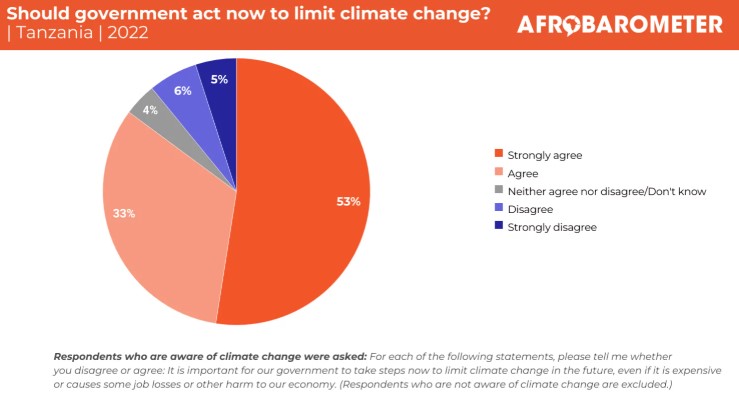
Most citizens who are aware of climate change say it is making life worse. READ MORE by clicking the Download.PDF button…!
Tanzanians commend COVID-19 response but call for more investment in preparing for future health emergencies
A recent Afrobarometer survey reveals that about one in seven Tanzanian households report losing a primary source of income due to the pandemic. Only about three in 10 adults say they have been vaccinated against COVID-19, and willingness to get vaccinated is strongly associated with trust in the government to ensure vaccine safety. Tanzanians are […]
Investing in Tanzania’s People – Valuing the U.S. Tanzania Partnership for Prosperity
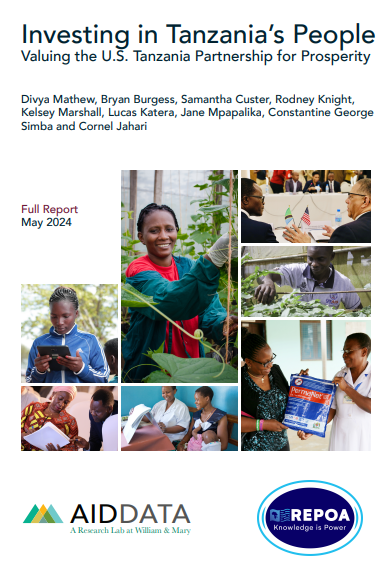
This study was conducted as a collaboration between REPOA and AidData, a U.S.-based research lab at William & Mary’s Global Research Institute. This research was made possible with generous support from the United States Department of State. The findings and conclusions of this report are those of the authors alone and do not necessarily reflect […]
The impact of COVID-19 pandemic on the educational inequalities in Tanzania
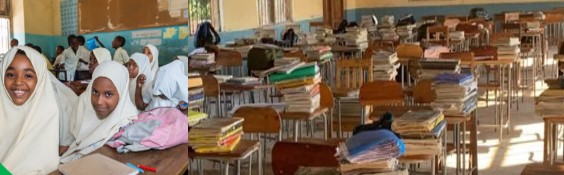
This Policy Brief is a result of a country-specific study conducted by REPOA in collaboration with the Southern Voice, to investigate the impact of COVID-19 on the educational inequalities in the pre- during and post-COVID-19 periods focusing on the primary student’s enrolment and learning behaviour, teacher’s engagement, and the application of ICT. The study covered […]
Status of the Transition to a Nature-Positive Green Economy in Tanzania
REPOA would like to extend its sincere gratitude for the financial support provided by the Green Economy Coalition (GEC) secretariat in London through ACODE to develop this working paper. The work presented in this paper has been funded by the MAVA Foundation through the Economics for Nature (E4N) programme. This paper assesses the status of […]
The Impact of the COVID-19 Pandemic on educational Inequalities in Tanzania
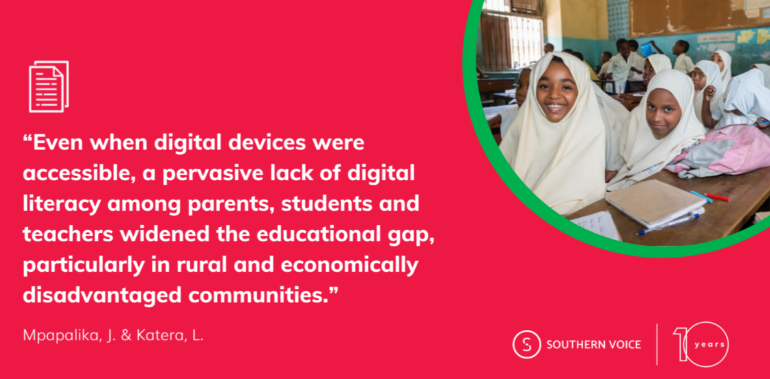
This study examines the impact of COVID-19 on educational inequalities in primary schools in Tanzania, focusing on student enrolment and learning behaviour, teacher engagement, and the application of information and communications technology (ICT), in 26 primary schools. Despite government efforts to provide free education and reduce inequalities, disparities persist, particularly along rural-urban, socio-economic and gender […]