Export Intermediation, Institutional Quality, and Export Performance in Tanzania: A Catalyst for Agricultural Transformation
This study analyses the role of intermediaries in Tanzania’s agricultural exports intensive margins in international markets, using annualized firm level customs transactions data at the HS6-code product level, export mode and by city and destination country from 2010 to 2020. Together with gravity information, this study applies the panel gravity-PPML model that is estimated at […]
Assessment of the Performance of Innovation Support Programmes in Agriculture Small and Medium Enterprises in Tanzania
This study was conducted to assess the performance of innovation programmes for the effectiveness of agriculture’s small and medium enterprises (SMEs). The findings of this study showed that most of the innovation centres mandated to support agriculture-related SMEs work in isolation without networking with other organisations. It is recommended that policies should be strengthened to […]
The Manufacturing Sector in Zanzibar: The Case Study of the Capacity Utilization, Manufacturing Costs, Business Environment, Investment Incentives, and Skills Gaps
The Revolutionary Government of Zanzibar (RGoZ) is determined to spur industrialization as among the means to meet the Zanzibar Vision 2025 of attaining the “upper middle-income status by the year 2050 through sustainable and inclusive human development1 ” This study aims at supporting such efforts by building a knowledge base and inform policy reforms in […]
Ripoti ya Utafiti Kuhusu Kuridhika kwa Watumiaji wa Huduma za Mahakama 2023
Chapisho hili limeandaliwa na REPOA kama sehemu ya ushirikiano na Mahakama ya Tanzania. Mahakama imewahusisha REPOA kama Taasisi huru ili kupima jinsi wananchi wanavyoridhishwa na utoaji wa huduma za Mahakama. Zoezi hili lililenga kutoa mrejesho wa huduma zinazotolewa na Mahakama ikilinganiswa na matarajio ya watumiaji na watumishi tangu utafiti wa awali ulipofanyika mwaka 2015 hadi […]
Analysis of Tax Revenue Mobilisation in Tanzania
The study seeks to assess the feasibility of increased domestic revenue for financing Tanzania’s development aspirations. The assessment is undertaken for the aggregate tax revenue as well as its four major tax categories of income tax, value-added tax (VAT), excise duties, and import duties. This is a unique contribution of this study to the literature, […]
Agricultural Commodity Price Changes, Food Security and Households’ Welfare in Tanzania
Agricultural commodity prices remain inherently volatile and have attracted great attention from both policymakers and governments in developing countries. There is an unresolved empirical question of whether the Government prefers low price of agricultural produce to smoothen households’ consumption or high price of agricultural produce to encourage production, trade, and export earnings. This study aimed […]
Urban Solid Waste Management in Tanzania: Our Work, Our Health

This policy brief examines health and safety conditions in Tanzania’s urban solid waste management practices. The analysis draws from a survey of 431 solid waste workers conducted in 2021 in Dar es Salaam, Mwanza, and Dodoma city councils. Read the full details below…
The Multi-Apping Dilemma: Safety and Earnings among Tanzanian Platform Workers
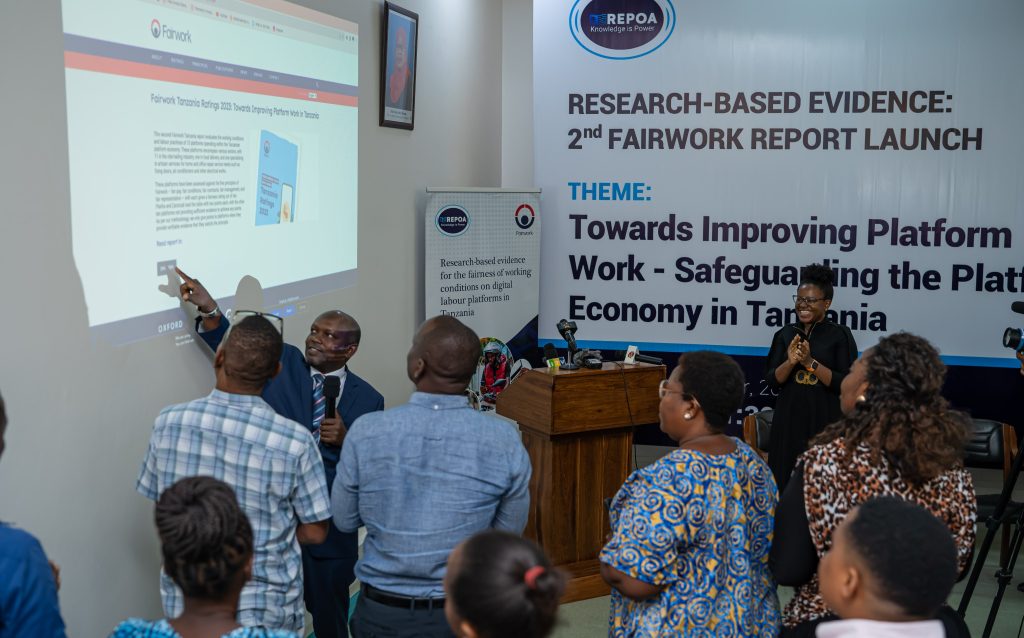
The safety risks of prolonged working hours in Tanzania’s platform economy are not thoroughly examined. This policy brief highlights the rise of multi-apping among Tanzanian platform workers and its impact on earnings and safety. It explores the trade-off between increased income prospects and safety risks. The brief offers stakeholders—including policymakers, platform operators, and worker associations—actionable […]
REGULATORY IMPACT ASSESSMENT: The Monetary Cost of Complying with Employment Regulations: Experience from the Hotel Industry in Tanzania
This Regulatory Impact Assessment (RIA) is a result of joint efforts between REPOA and the Hotel Association of Tanzania (HAT). The RIA quantifies the cost that tourism business operators, in particularly the accommodation businesses, incur when complying with the existing employment regulatory regime. The RIA primarily responds to the following questions: How much compliance costs […]
Building productive capacities – opportunities and constraints in the cashew nut sub-sector

This policy brief provides a framework of analysis on building productive capacities in Tanzania – regarding opportunities and constraints in the cashew nut sub-sector. This brief seeks to inform policy analysts, private sector practitioners, and decision makers in the public institutions responsible for promoting economic growth, industrial development, investments, trade expansion, private sector development, and […]
The impact of COVID-19 pandemic on the educational inequalities in Tanzania

This Policy Brief is a result of a country-specific study conducted by REPOA in collaboration with the Southern Voice, to investigate the impact of COVID-19 on the educational inequalities in the pre- during and post-COVID-19 periods focusing on the primary student’s enrolment and learning behaviour, teacher’s engagement, and the application of ICT. The study covered […]
A Review of Tanzania’s Fiscal Regime for Climate Action
Objective of this report is to develop optimal levels of taxes, levies, and subsidies as domestic financial resources to achieve the targets under the FYDP III and NDC emission reduction targets. This includes an assessment of the potential of using taxes, levies, and subsidies for climate action (compared with the climate tax regimes of other […]
Building productive capacities – opportunities and constraints in the tea sub-sector

This policy brief provides a framework of analysis on building productive capacities in Tanzania – regarding opportunities and constraints in the tea sub-sector. This brief seeks to inform policy analysts, private sector practitioners, and decision makers in the public institutions responsible for promoting economic growth, industrial development, investments, trade expansion, private sector development, and providing […]
Assessment of Firm Level Drivers of Productivity and Competitiveness in the Tanzania Enterprise Sector
As noted in the third Five-Year Development Plan (URT, 2021), the enterprise sector in Tanzania is constrained by several challenges including: pervasive informality, weak legal and regulatory framework and unfavourable business environment which confounds key functional features of private sector operations such as enhancing the registration of property, easing access to credit, protecting minority investors, […]
Public Perceptions of COVID 19 Vaccine Efficacy among Urban Dwellers in Tanzania – A Case of Temeke Municipal
This study focuses on public perceptions of the efficacy of COVID-19 vaccines, among Tanzanians living in urban areas. Specifically, the study examined people’s understanding of the COVID-19 pandemic, perceptions of people towards COVID-19 vaccination, socio-economic disparities in COVID-19 vaccine preferences, and mechanisms of coping with the COVID-19 pandemic. Results show that COVID-19-related concerns seemed to […]
Factors for Crop Insurance Uptake among Smallholder Maize Farmers: A Case Study of Njombe Region in Tanzania
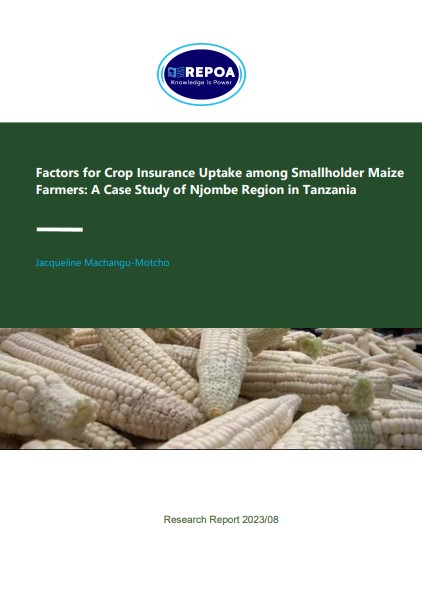
The aim of this study was to examine various factors that determine small-holder farmers’ decisions towards adopting crop insurance schemes in their agricultural production activities. Based on the study’s results, there was a strong correlation between independent variables such as land ownership, size, on-farm revenue, farmer organisations or groups, marital status (single) and years of […]