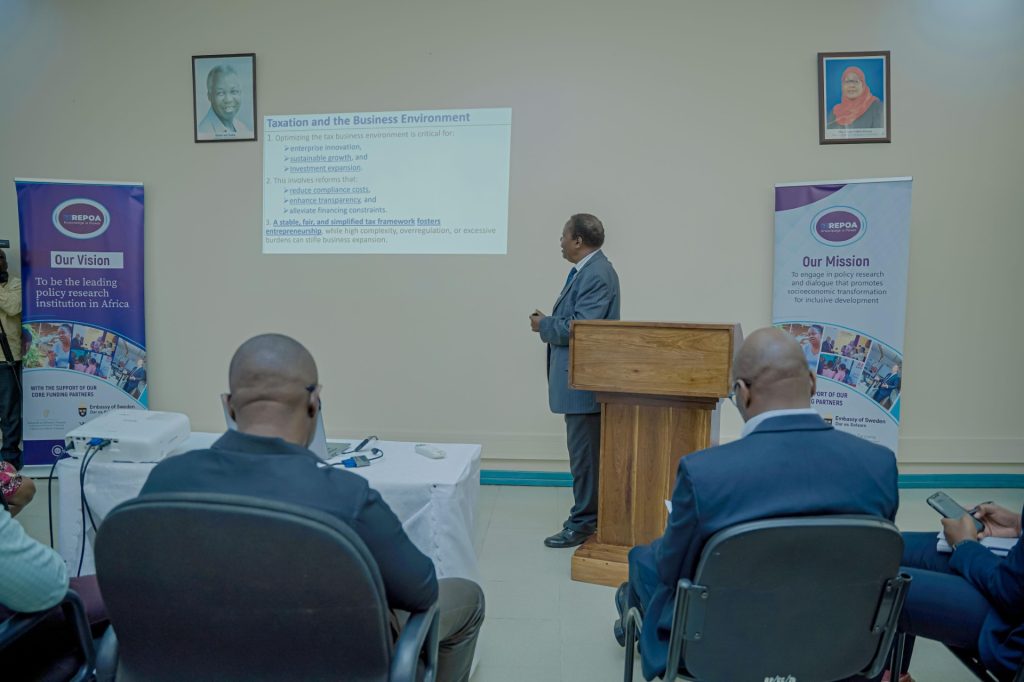
In February 2026, REPOA hosted a half-day workshop on Contemporary Tax Research in Tanzania, bringing together researchers, policymakers, academics, development partners, private sector representatives, and civil society actors to examine the country’s evolving tax landscape and identify priorities for future research and policy engagement.
The workshop took place against the backdrop of Tanzania’s ongoing efforts to strengthen domestic revenue mobilisation as a foundation for sustainable development. While reforms over the past decade have expanded the tax base, improved compliance, and enhanced tax administration, participants noted persistent challenges, including informality, limited tax literacy, compliance costs, sector-specific distortions, and the fiscal implications of digitalisation, the energy transition, and global tax governance reforms.
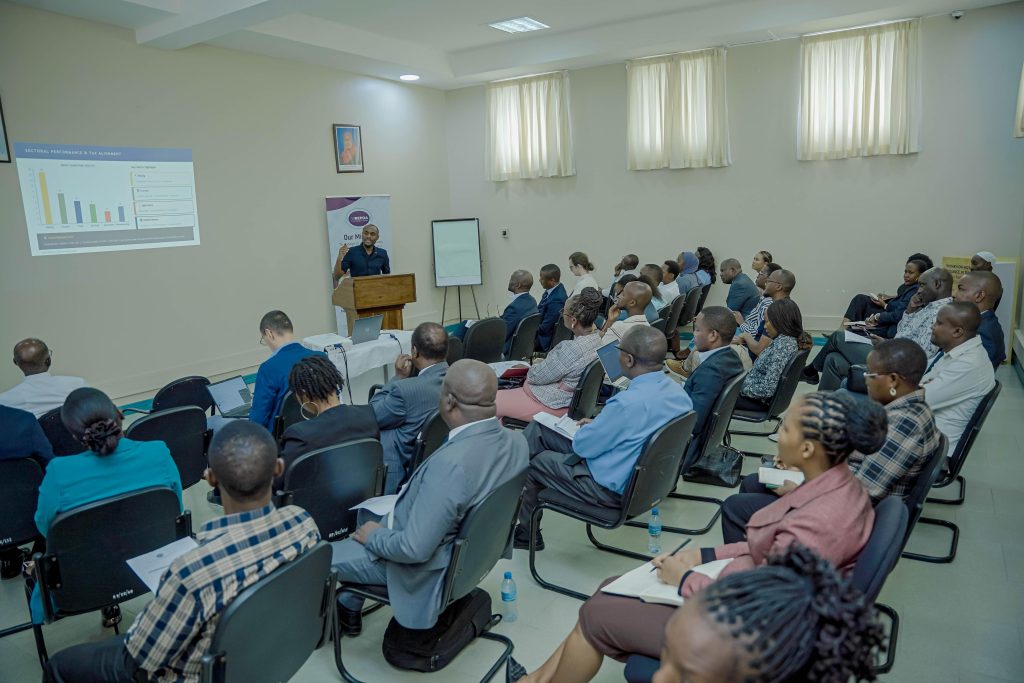
A major focus of the discussions was the growing body of local and international research on issues such as digital economy taxation, property tax reforms, environmental taxation, tax equity, and behavioural approaches to improving compliance. Participants highlighted the need to better connect research findings with policymaking, noting that valuable evidence often remains fragmented across institutions and is not always accessible to decision-makers.
The workshop provided a platform for sharing recent empirical and analytical research on tax policy and administration in Tanzania and the wider East African region. Participants also identified emerging research priorities, including digital taxation, environmental tax instruments, sub-national revenue mobilisation, tax expenditure analysis, and sector-specific revenue opportunities, while discussing methodologies and data requirements needed to enhance the quality and relevance of tax research.
A key outcome of the event was the development of a shared understanding of ongoing tax research initiatives and the identification of critical knowledge gaps requiring further investigation. Discussions led to the formulation of a proposed research roadmap to guide collaborative studies over the next two to three years, alongside practical recommendations to improve access to tax data, strengthen research uptake, and promote greater cross-institutional collaboration.
Attended by approximately 30–40 participants from government institutions, universities, research organisations, development agencies, the private sector, and civil society, the workshop reinforced the importance of stronger links between research and policymaking. By fostering dialogue and collaboration, the event contributed to building a more coordinated national tax research ecosystem capable of supporting effective, equitable, and evidence-based fiscal reforms in Tanzania.